
Our story
The tree behind the print
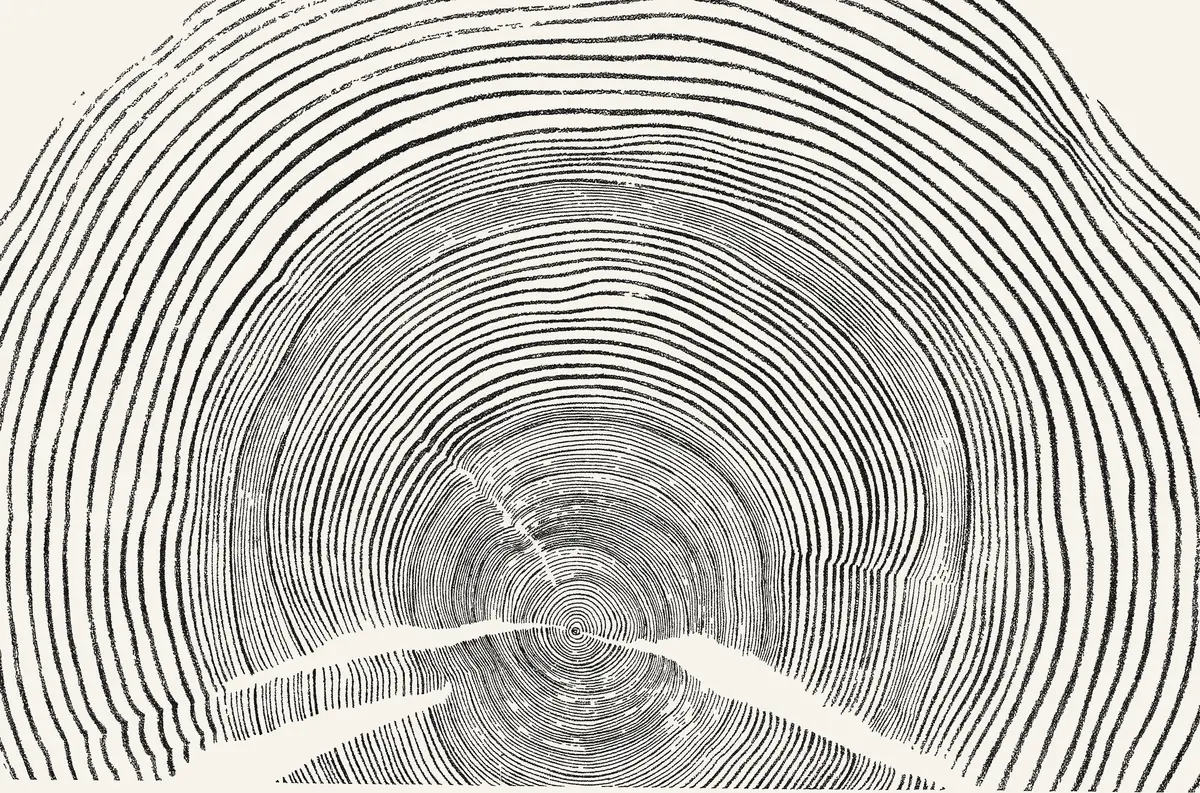
Every ring in our print belonged to one black spruce that grew in the Adirondacks for 115 years.
A stump, some ink and a sheet of paper
Back in 1894, the New York Forest Commission wanted to show how Adirondack trees grow. So someone took the fresh-cut stump of a black spruce, rolled ink across it and pressed paper on top. The page in their report isn’t a drawing. It’s the tree itself, ring for ring, at full size.
The note under it says the spruce was 115 years old and a foot across. It also points out something you can still see: the outer rings get noticeably wider. Loggers had thinned the woods around it eighteen years earlier, and with more light, the old spruce put on a growth spurt late in life. Those wide outer rings are in our print too.
From a stump to the park
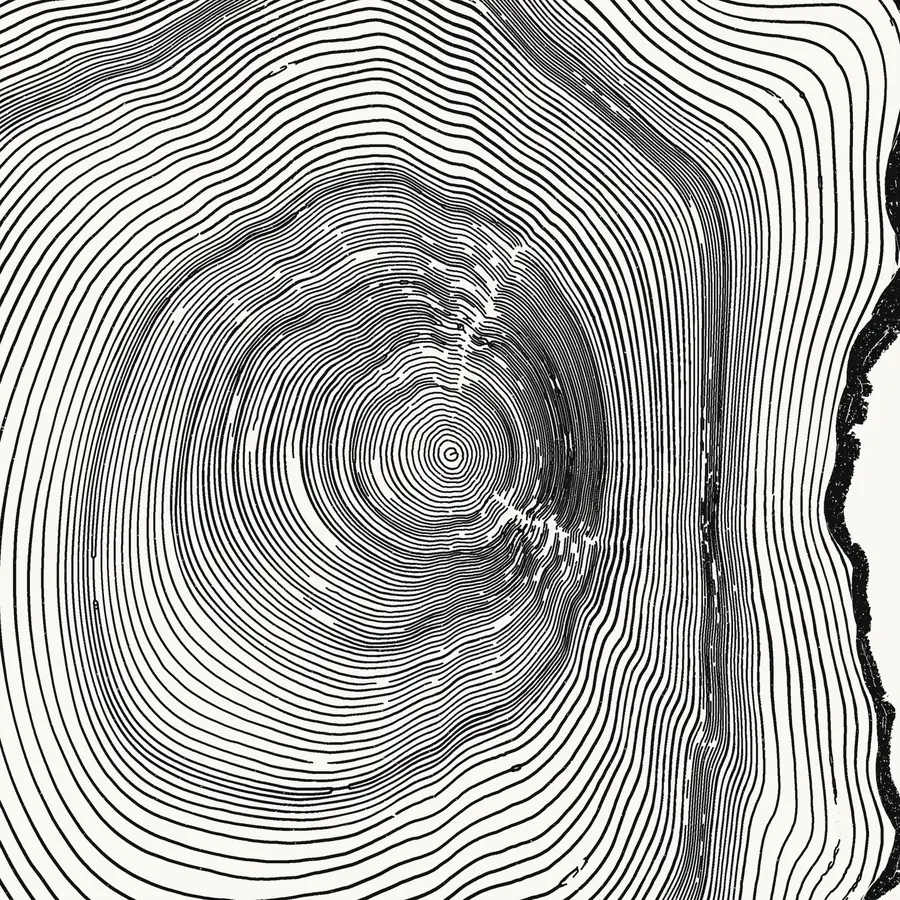
We traced every ring from that page and kept the tree’s own quirks: the uneven spacing, the wobbles, the good years and the lean ones. Then we drew them into the outline of the Adirondack Park, following the Blue Line, the park’s real boundary.
The edge of the park became the bark. We rounded the corners a little so it looks like it came off a real trunk.
The heart is on Marcy
Look closely and you’ll notice the center of the tree isn’t in the middle. We put it on Mount Marcy, the highest point in New York, so the rings spread out from the summit across the whole park.
Adirondacks, Est. 1892
Underneath, Adirondacks and Est. 1892 are painted in a loose brush script. 1892 is the year New York drew the Blue Line and the Adirondack Park began. By then our spruce had already been growing for more than a century. It sprouted around the time of the American Revolution.